The Warmth of Wood: Beams, Paneling & Finishes for Today’s Interiors
Wood has a way of bringing instant warmth to an interior. Beyond furniture and flooring, we are seeing it used more intentionally as an architectural element, from ceiling beams and wall paneling to custom cabinetry and millwork.
What makes wood especially versatile is its ability to shift with the style of a home. Pale oak can feel light and contemporary, walnut brings richness and depth, and darker finishes can create a more dramatic, tailored effect. The right wood doesn't simply decorate a room. It adds texture, character, and a sense of permanence.
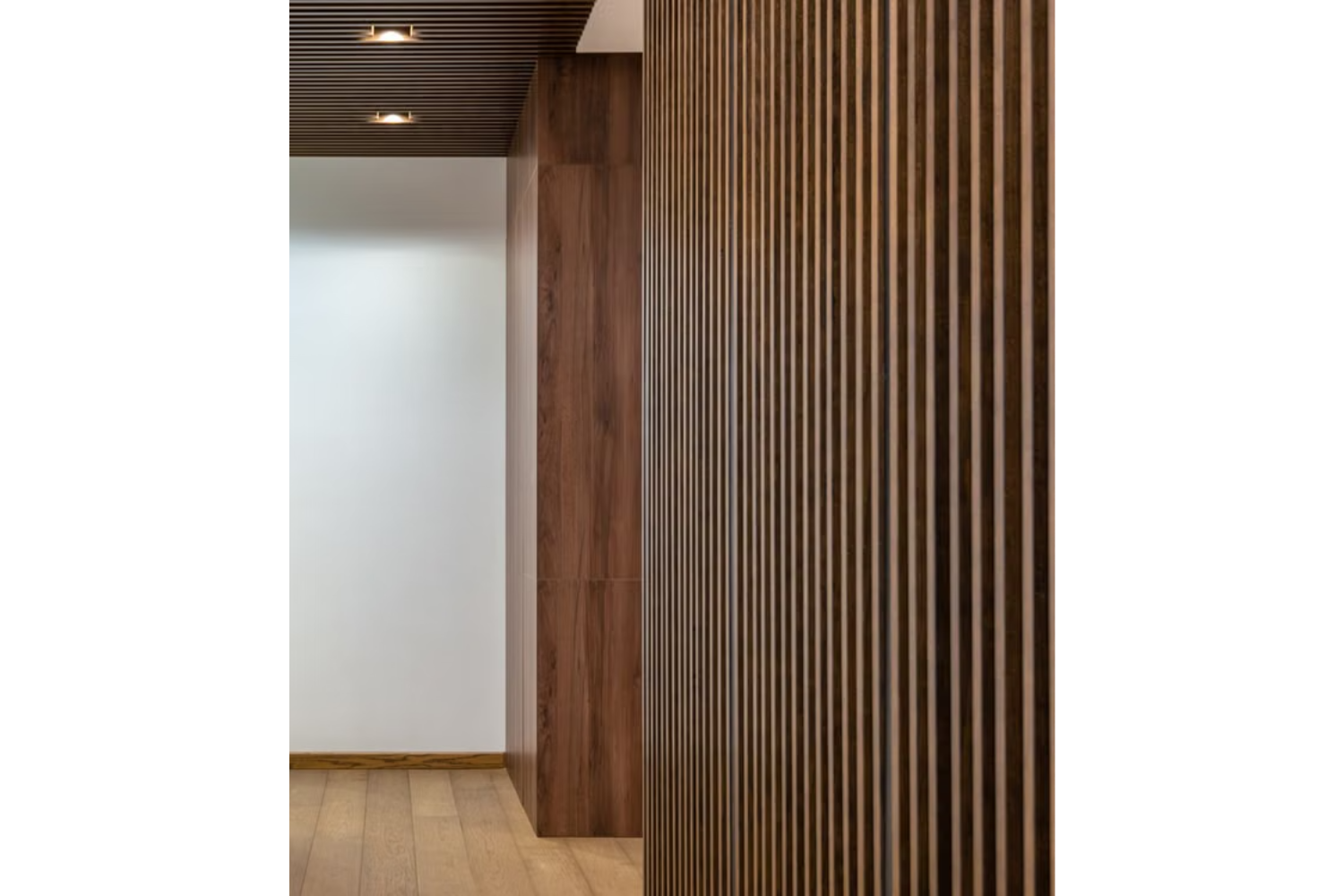
Vertical wood slat paneling brings natural warmth, texture, and architectural character to a contemporary interior.
Bringing Wood Into the Architecture
Some of the most impactful uses of wood happen when it becomes part of the architecture itself. Ceiling beams can add dimension and draw the eye upward, while wood paneling can transform a simple wall into a defining feature.
Wood can also be introduced more selectively through built-ins, cabinetry, doors, or other custom millwork. It doesn't need to cover an entire room to make an impact. Often, one thoughtfully designed architectural element is enough to give a space greater warmth and character.
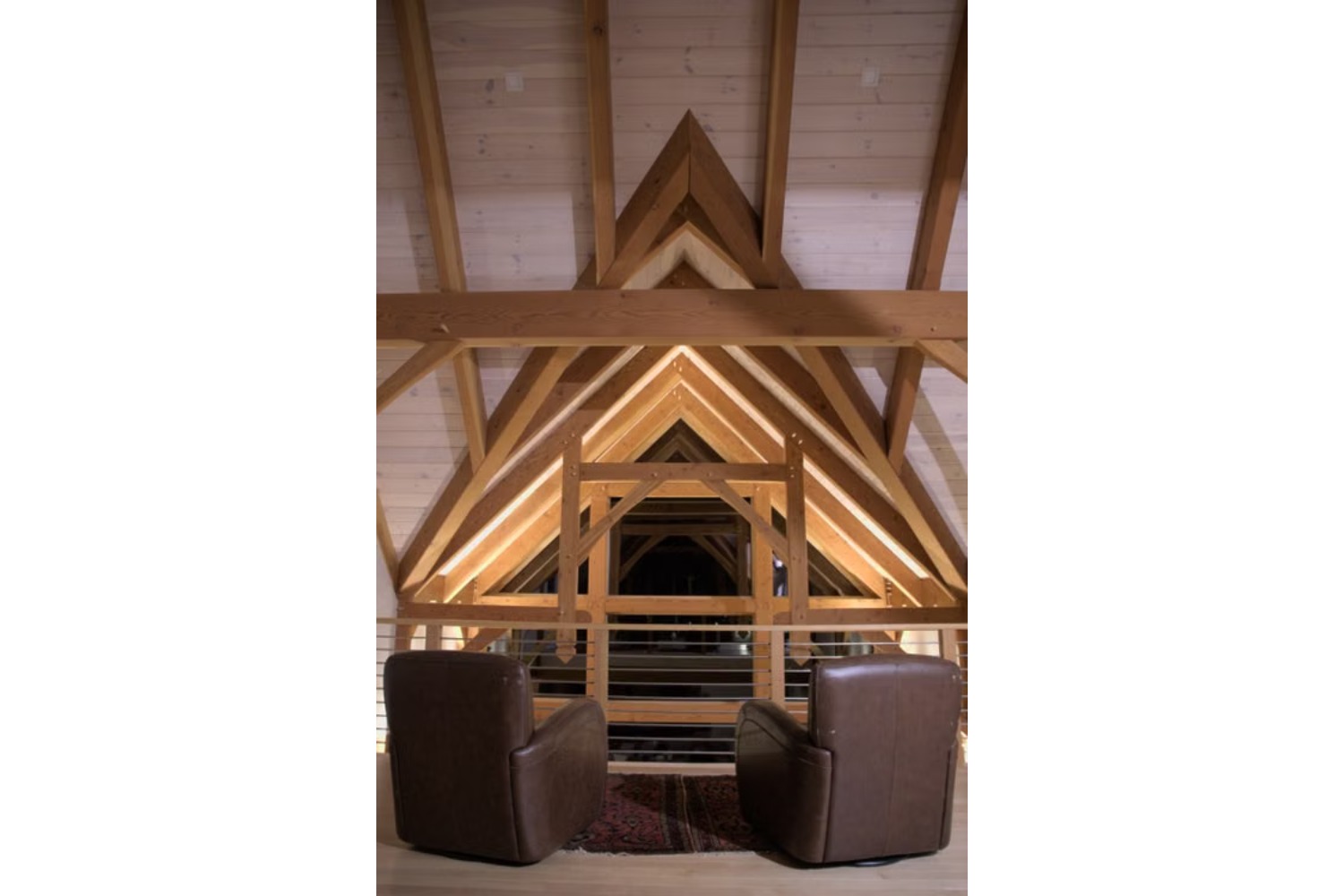
Exposed wood beams draw the eye upward, bringing warmth, dimension, and architectural character to a vaulted interior.
Choosing the Right Wood and Finish
The species and finish can completely change how wood feels in a room. White oak and other lighter woods tend to create an airy, understated look, while walnut and deeper stains bring richness and contrast.
Finishes can also highlight the natural character of the material. Matte and low-sheen finishes allow the grain to take center stage, while techniques such as cerusing, wire-brushing, or liming can introduce additional texture and dimension.
And not every wood tone in a room needs to match. Mixing woods can create a more layered, collected interior, particularly when there is enough contrast for the combination to feel intentional.
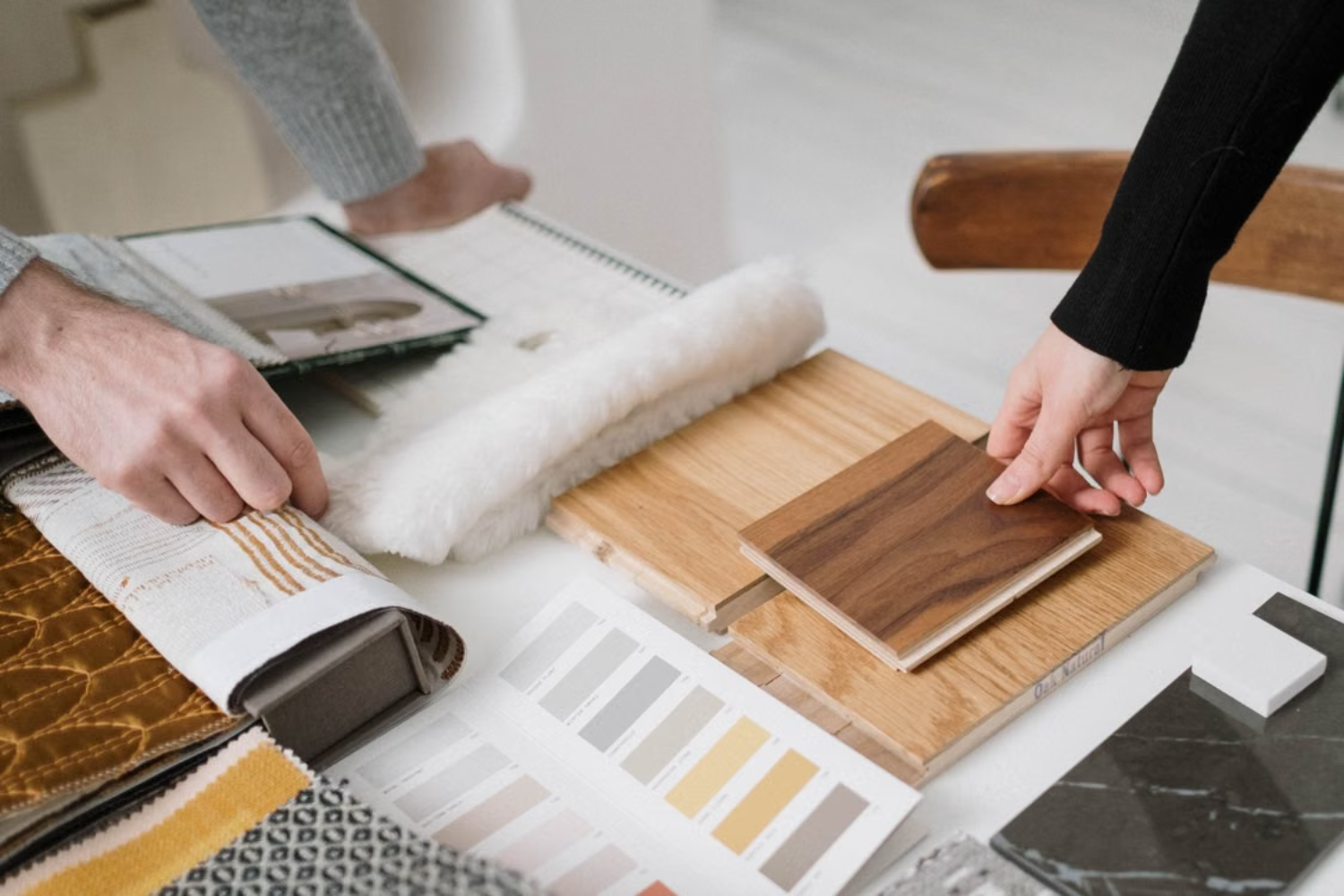
Comparing wood species and finishes helps create a thoughtful balance of tone, grain, texture, and warmth within an interior.
Creating Balance With Other Materials
Wood becomes even more interesting when paired with contrasting materials. Stone can bring coolness and weight, metal adds a refined edge, and plaster or painted surfaces allow the natural grain of the wood to stand out.
The goal is balance. A room filled entirely with the same wood tone can feel heavy, while carefully placed wood elements can soften cleaner architectural lines and add warmth to spaces that might otherwise feel stark.
It is that tension between natural and refined, light and dark, smooth and textured that can make an interior feel layered rather than one-dimensional.
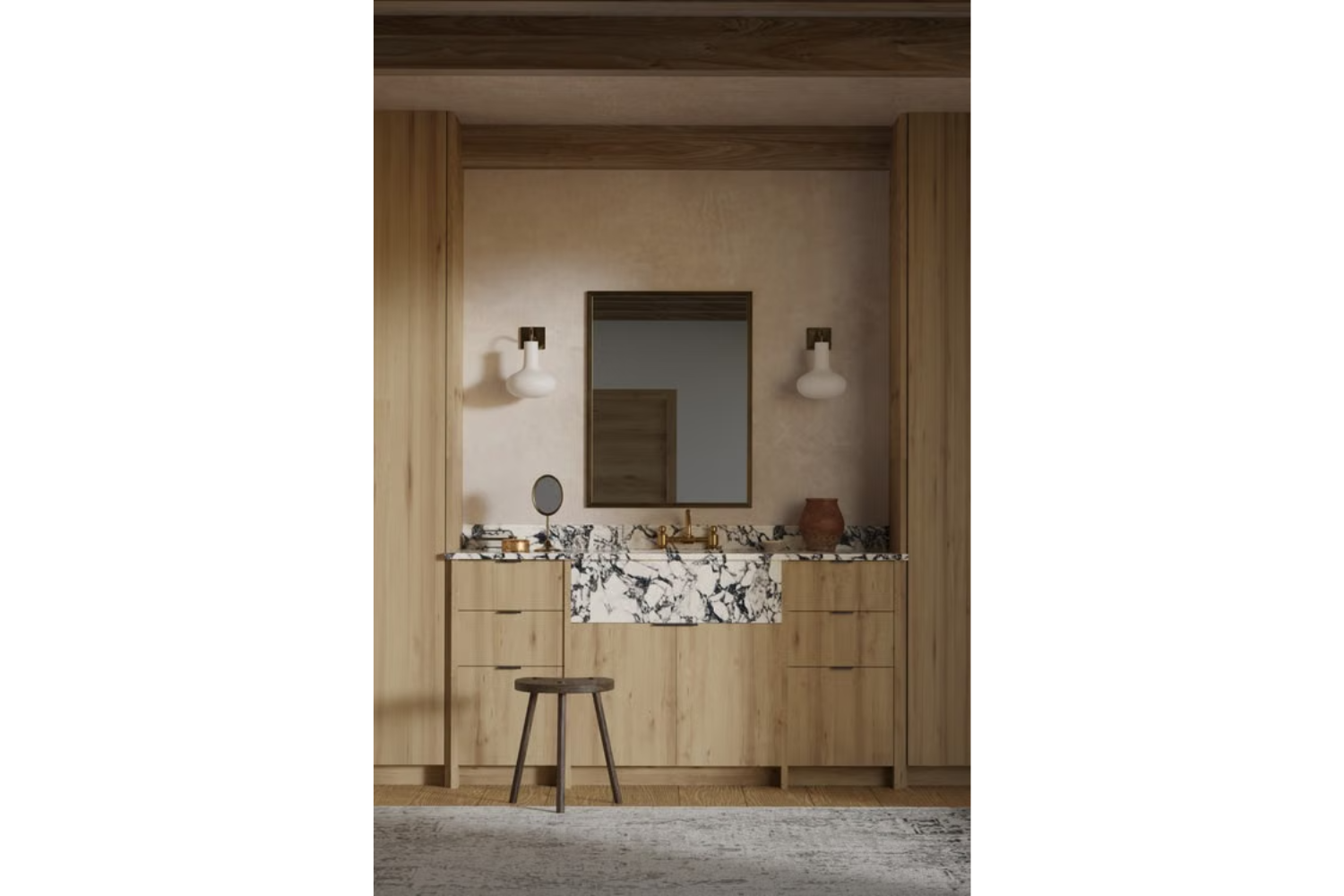
Warm wood paired with expressive stone creates a layered balance of natural texture, contrast, and refinement.
Bring More Warmth Into Your Home
Whether through architectural beams, custom paneling, cabinetry, or a beautifully considered finish, wood can add depth and character that lasts well beyond a passing trend.
At House of Shima, we consider materials as part of the larger story of a home, selecting finishes and architectural details that complement both the space and the people who live there.
Looking to add more warmth, character, and thoughtful detail to your home? Schedule a complimentary discovery call with House of Shima.